2026-11-14
Incisional Double Eyelid Surgery vs the Suture Method: What Each One Plans
The suture method plans zones and knots; incisional double eyelid surgery decides what to remove and where to fix. Here is what each method plans during surgery.
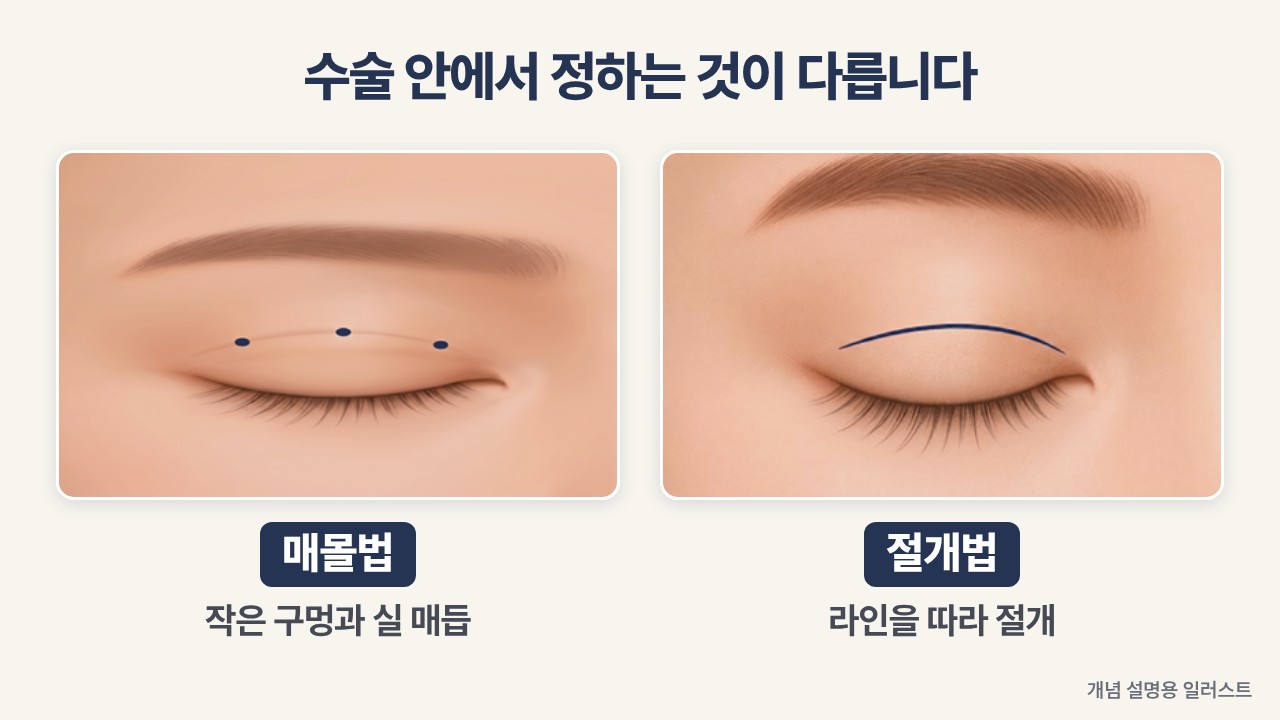
The incisional method and the suture method reach the double eyelid crease in different ways, so they decide different things during surgery. The suture method plans how many zones to hold and with what knots; the incisional method decides what to remove and where to fix the skin. It is not that one method is better; what needs to change in your own eyes is what decides the method.
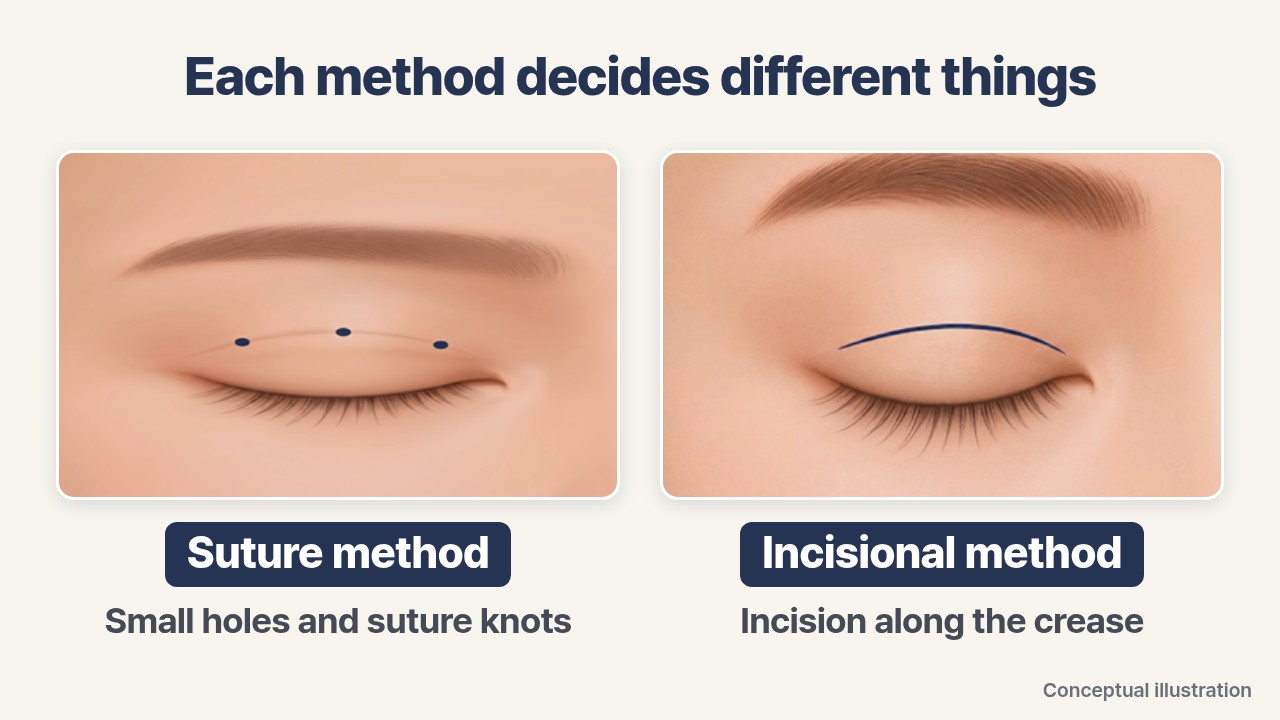
What holds the crease in the suture method and in incisional double eyelid surgery?
Both methods create a connection between the eyelid skin and the tissue beneath it, so that the skin folds at the desired height. The difference lies in which route, and what, is used to make that connection.
The suture method makes tiny holes in the skin and ties suture knots to form the crease. At 1mm Plastic Surgery, the suture method (natural adhesion) ties the suture knots within the muscle. The incisional method cuts the skin along the designed line, removes excess fat and part of the muscle, and then fixes the incised skin to the tarsal plate and the levator muscle (the muscle that opens the eye).
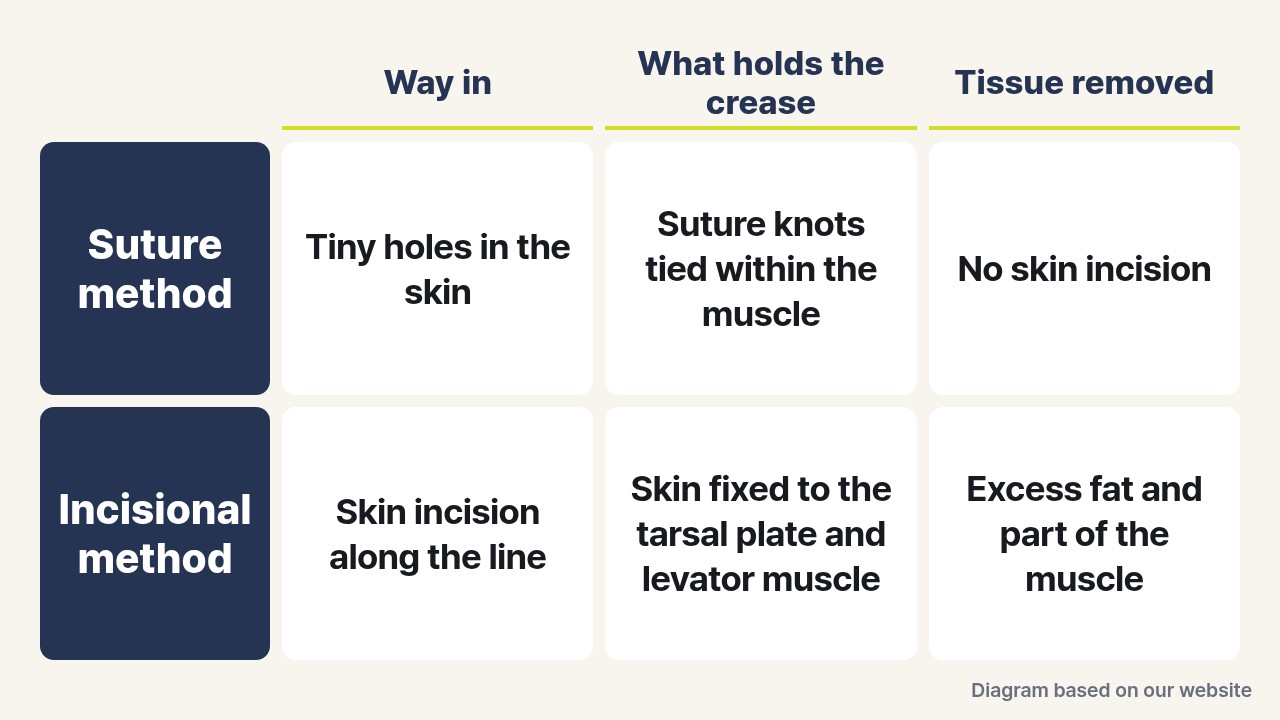
| Suture method (natural adhesion) | Incisional method | |
|---|---|---|
| Way in | Makes tiny holes in the skin | Cuts the skin along the designed line |
| Holds the crease | Suture knots tied within the muscle | Fixation linking the incised skin to the tarsal plate and levator muscle |
| Tissue removed | The skin is not incised | Excess fat and part of the muscle are removed |
| Points to consider | If the eyelid is thick or sagging a lot, the suture method alone may not give enough hold | Because the skin is incised, the incision scar and recovery period also need to be considered |
This table does not say which method is better; it sets side by side what each method does during surgery.
How to gauge the method from eyelid skin thickness, fat, sagging and eye-opening strength is covered in our earlier article, “Incisional vs non-incisional double eyelid: which method suits me?” (in Korean). This article follows the next question: what each method actually plans during surgery.
What is planned in the suture method?
A common thought
Surely more knots make it stronger?
At 1mm Plastic Surgery, the suture method (natural adhesion) has no fixed number of holes. Each eye is divided into four zones from the inner to the outer corner, and the crease is designed for each zone according to its muscle strength, skin condition and tissue volume.
- Eye-opening strength — the stronger the eye-opening, the fewer the holes planned; the weaker, the more.
- Tissue volume and any existing crease — these set the number of holes and the crease height in each zone.
- Left–right difference — no face is perfectly symmetrical, so the right and left eyes are planned separately.
- Eyes open and closed — the spacing of the holes and the crease height are set with the whole face in view.
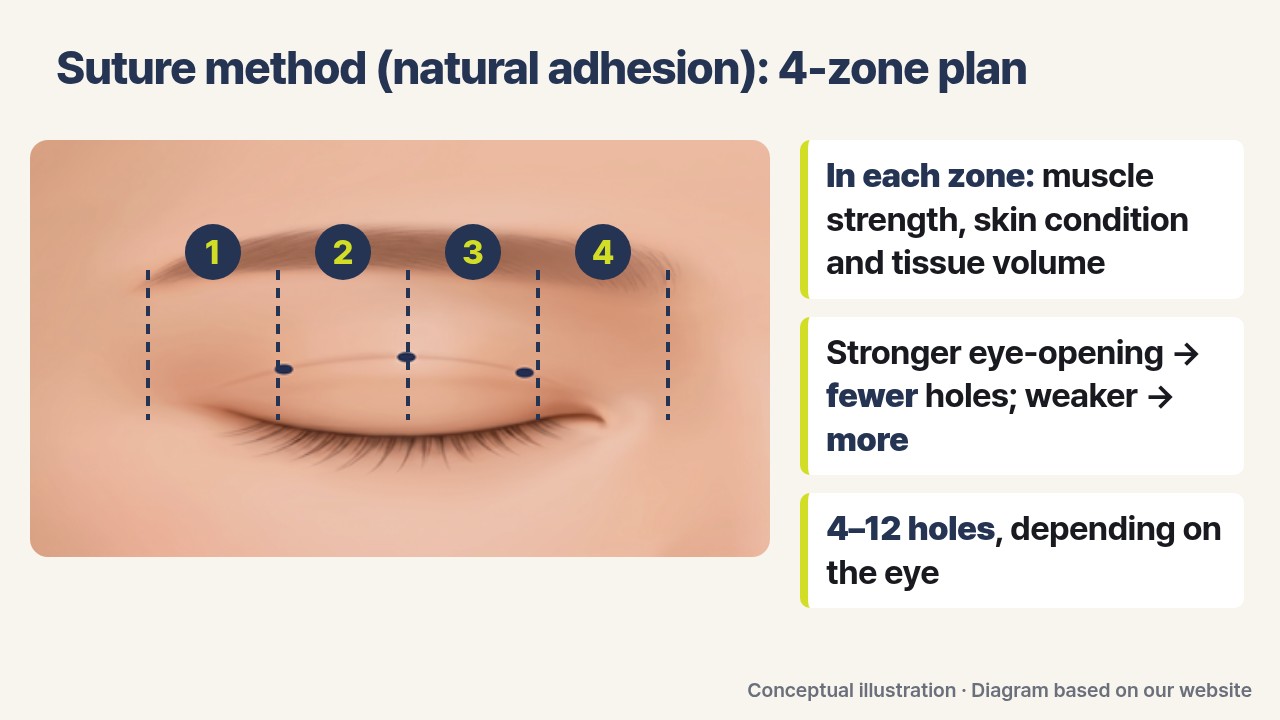
Depending on the eye, the number of holes can range from at least 4 up to 12. The number is not a target; it is the result of the plan.
The key point
More holes do not mean a better suture method. Even in the same person, eye-opening strength and tissue can differ by zone, so the number and height of the knots may differ between the two eyes.
Our website describes the suture method as one recommended when a natural-looking double eyelid is wanted, when swelling needs to be minimal and recovery short, when the skin sags relatively little, or when there are multiple folds.
In incisional double eyelid surgery, what is removed and where is it fixed?
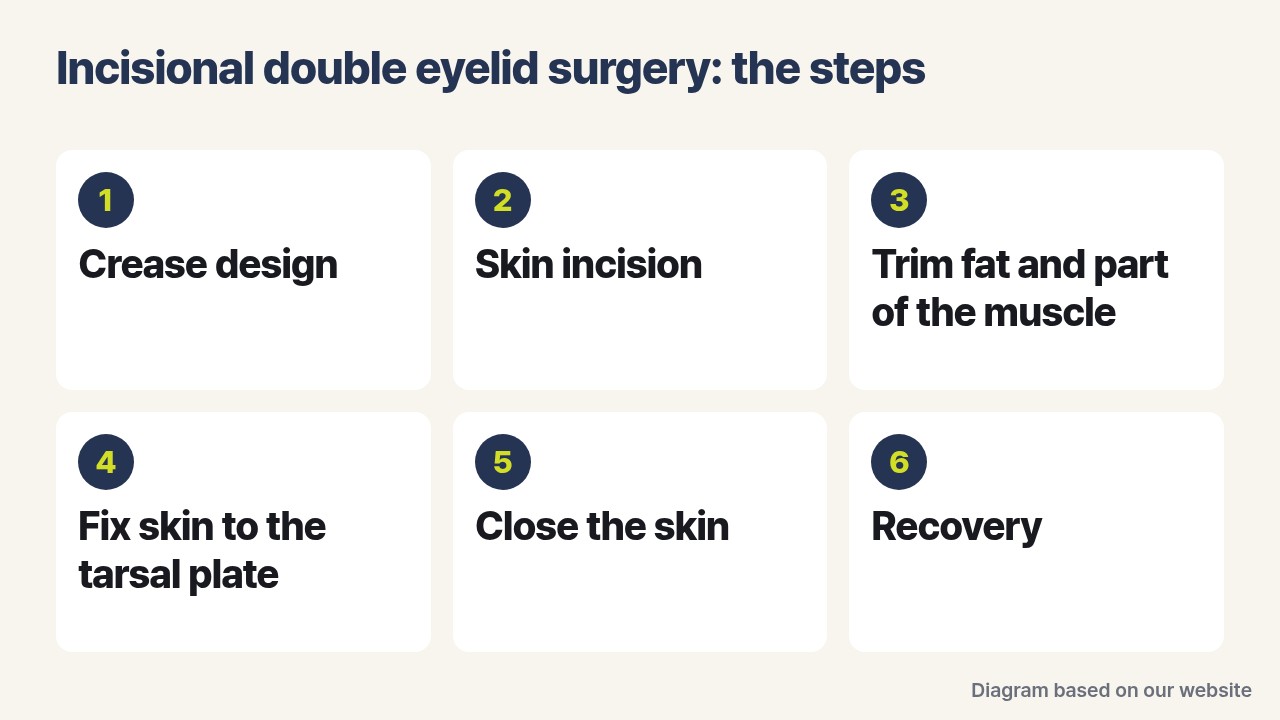
Because the skin is opened, the incisional method allows the tissue beneath to be trimmed under direct view. The surgical steps listed on 1mm Plastic Surgery’s incisional double eyelid page, and the recovery that follows, are as follows.
- Crease design — the height and shape of the crease are designed in a one-to-one consultation before surgery.
- Skin incision — the skin is cut along the designed line.
- Tissue trimming — excess fat and part of the muscle are removed.
- Fixation — the skin at the incision is linked to the tarsal plate to fix the double eyelid.
- Skin closure — the skin along the crease is stitched.
- Recovery — in the early period after surgery, the crease may look different while swelling goes down and the tissue heals.
Our website describes the incisional method as one recommended when the eyelids droop or carry a lot of fat so the eyes look heavy, when an existing fold has stretched and sagged, when there is a lot of fat over the eyelid, or when a well-defined double eyelid is wanted. The shape of the crease is set at the design stage, divided by where the line starts — in-line, in-out line, semi-out line, out line and so on.
The incisional method can generally be expected to give a firmer fixation. However, this does not mean the crease cannot weaken or change; it can, depending on tissue condition, the degree of adhesion and the course of recovery. The incision scar may usually take around 6 months to a year to heal and settle, and this varies from person to person.
If eyelid fat or eye-opening strength is also an issue, does the method change?
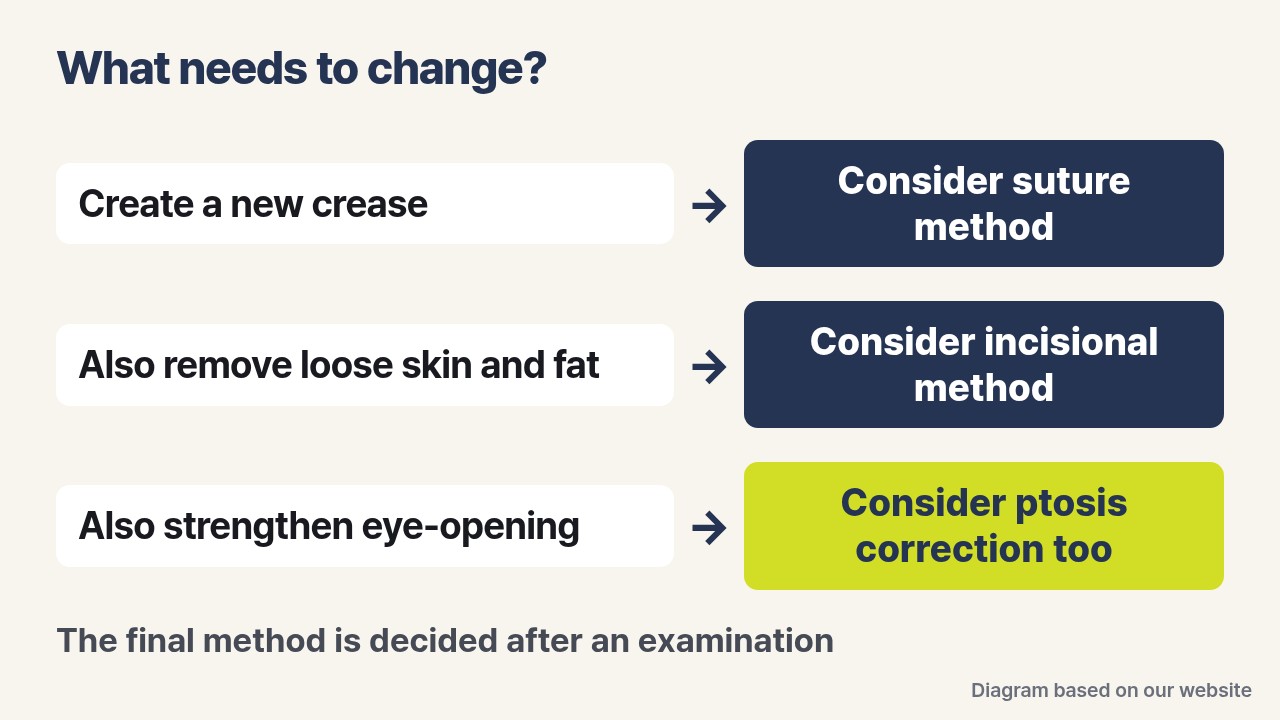
Sometimes a double eyelid concern is about more than the crease. In that case, along with the method of making the crease, we look at what else needs attention.
- A lot of fat over the eyelid, or a thick eyelid — in these cases our website recommends the incisional method.
- A sunken upper eyelid that makes the fold look multi-layered — upper eyelid fat injection may also be considered. It can be done on its own, both on eyes that have had double eyelid surgery and on eyes without a double eyelid.
- Weak eye-opening strength (ptosis) — double eyelid surgery alone without ptosis correction may leave the fold looking loose or the eyes looking sleepy, so ptosis correction is considered as well. Ptosis correction also has non-incisional and incisional methods.
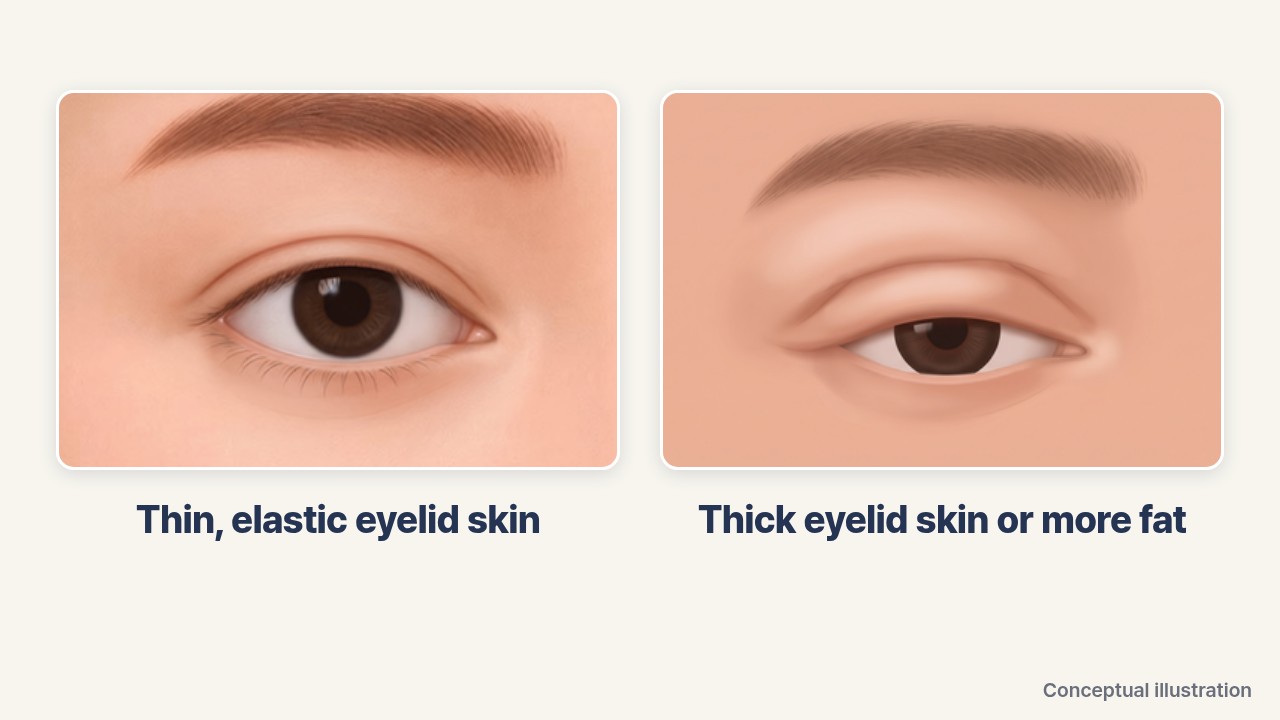
Whether ptosis correction is needed can be gauged by how much of the pupil shows when the eyes are open. An accurate judgement requires an examination and consultation.
In short
“Incisional or suture?” is decided not by looking at the crease alone, but together with the amount of eyelid fat and eye-opening strength.
If the eye has had suture-method surgery before, what is looked at next?
If you have had double eyelid surgery before, what is examined differs from a first surgery. Depending on adhesion or scarring from the previous surgery and the current skin condition, the incisional method may be needed. The suitable method can differ depending on how the previous surgery was done and the current condition, so it is decided after an examination.
- When and how the previous surgery was done
- Adhesion and scarring
- Current skin condition and fat
- Left–right difference in eye-opening strength
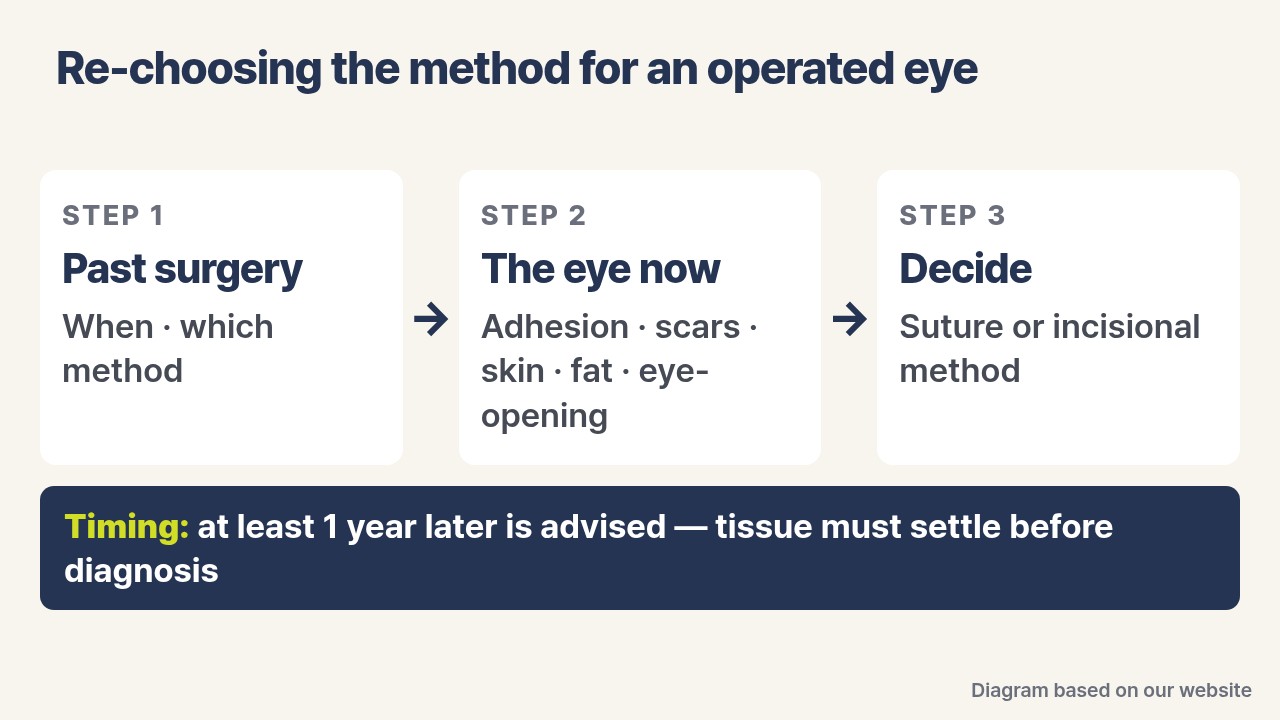
Timing matters too. Our website advises having revision surgery at least 1 year later, because diagnosis is possible only once the eye tissue has stabilised. However, at the surgeon’s discretion, it is sometimes done in the early period after surgery, before the scar hardens.
If you know when and how your previous surgery was done, it helps to tell us at the consultation.
What is checked at a consultation to decide the method?
Rather than picking the name of a method first, we look at the eye in parts, decide what needs to change, and then decide the method. At 1mm Plastic Surgery, the consultation checks the following.
- Eye analysis — the shape of the eye, eye-opening strength, muscles, skin thickness and facial asymmetry.
- Each side — the condition and eye-opening strength of the right and left eyes are looked at separately.
- The crease you want — its height and shape are discussed with the eyes both open and closed.
- What to check alongside — eyelid fat, eye-opening strength and any previous surgery.
- What to consider for recovery — the recovery period and precautions differ by method, so they are explained individually at the consultation.
Possible side effects
With both the suture and incisional methods, results and recovery may differ depending on your eye condition, and side effects such as swelling and bruising, asymmetry, inflammation or infection, scarring and loosening of the crease may occur. If anything feels wrong after surgery, please have it checked at a clinic visit.
Incisional double eyelid and suture method: frequently asked questions
With the suture method, do more holes (knots) make it stronger?
More holes do not mean a better surgery. At 1mm Plastic Surgery, the suture method (natural adhesion) plans fewer holes the stronger the eye-opening and more the weaker it is, and sets them zone by zone according to tissue volume and any existing crease. Depending on the eye, the number can range from 4 to 12.
Does incisional double eyelid surgery always remove fat?
The steps of incisional double eyelid surgery include removing excess fat and part of the muscle. How much is trimmed depends on the condition of the upper eyelid. Removing too much fat or muscle can create multiple folds, and if the upper eyelid is sunken, fat grafting may be considered instead.
When does the incision scar settle?
After eye surgery, it may usually take around 6 months to a year for the scar to heal and swelling to go down so that it settles, and this varies from person to person. If the scar concerns you during recovery, please have it checked at a clinic visit.
When is the shape of the incisional crease decided?
The height and shape of the crease are designed at a one-to-one consultation before surgery. Depending on where the line starts, the shape is divided into in-line, in-out line, semi-out line, out line and so on, and it is discussed with the eyes both open and closed.
Are the two eyes sometimes operated on differently?
No face is perfectly symmetrical, so at 1mm Plastic Surgery the suture method (natural adhesion) plans the right and left eyes separately. The number and spacing of the holes and the crease height are set for each eye based on symmetry and the difference in eye-opening strength.
At your consultation
Before the name of a method,
we check what needs to change in your eyes
- Eye shape · eye-opening strength · skin thickness
- Left–right difference and facial asymmetry
- The height and shape of the crease you want
- Recovery and precautions for each method
We check your eye condition and discuss a suitable surgical approach. You can read about incisional double eyelid surgery and the suture method (natural adhesion) on our website. Results and recovery may differ from person to person.
Consultation and booking
| Enquiries |
[email protected]
Getting in touch in advance can help reduce your waiting time. |
|---|---|
| Telephone | +82-2-552-1171 |
| +82 10-9451-1171 | |
| Opening hours |
Weekdays 10:00 – 19:00 Saturday 10:00 – 16:00 Closed Sundays and public holidays — for holiday opening, please check the monthly schedule notice. |
| Address | 7th, 8th, 9th and 10th floors, Youngshin Building, 449 Gangnam-daero, Seocho-gu, Seoul 2-minute walk from Exit 7, Sinnonhyeon Station |
| Website | 1mmpsglobal.com |
#IncisionalDoubleEyelid #SutureMethod #DoubleEyelidSurgery #DoubleEyelidSurgeryKorea #PtosisCorrection #EyeSurgery #1mmPlasticSurgery #KoreanUnderEyeFatSurgery #EpicanthoplastySurgery #JuvelookSkinBooster
This post was written by the founder of a medical institution to provide medical information. The images in this post are conceptual illustrations and diagrams made to aid understanding; they do not show real people and are not before-and-after images. For any surgery, its suitability for you, the result and the course of recovery may differ depending on your eye condition, and side effects may occur. Please confirm the details through a consultation.
Clinic Info
Details
- 서울특별시 서초구 강남대로 449 영신빌딩 7, 8, 9, 10층
- 02-552-1171
- Mon-Fri 10:00-19:00Sat 10:00-16:00
- Director 도언록
- 1mmps.com