2026-11-20
Asymmetrical Double Eyelids After Surgery: Fix One Side or Both?
With asymmetrical eyes after surgery, the cause decides which side is treated and how far. When to judge, and how the scope is set.
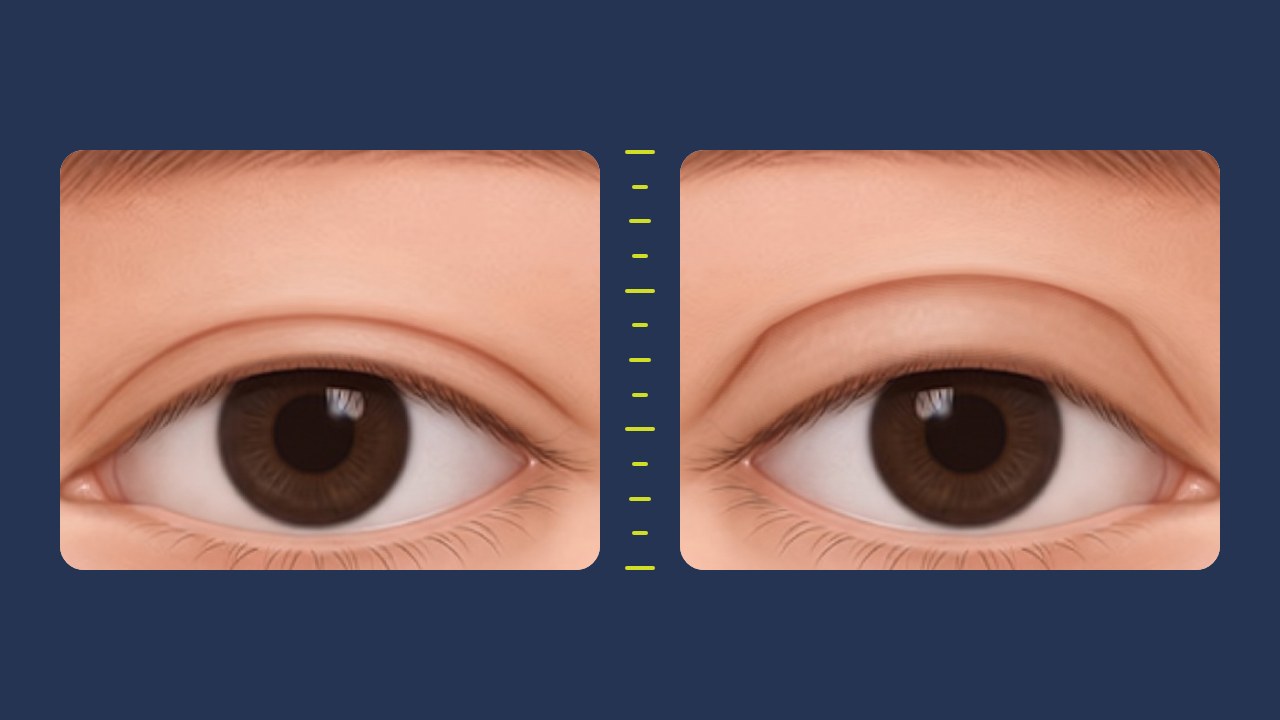
When your eyes look different after double eyelid surgery, the first thought is often ‘Do I need to have it redone?’ But there is more than one reason eyes can look uneven, and the reason decides which side is treated and how far the correction goes. Correction is not about making both eyes identical; it is about finding the cause and balancing the difference between the two sides as closely as possible.
Asymmetrical double eyelids after surgery: is it too early to judge?
A common thought
Only one crease looks thicker. Will it stay like this?
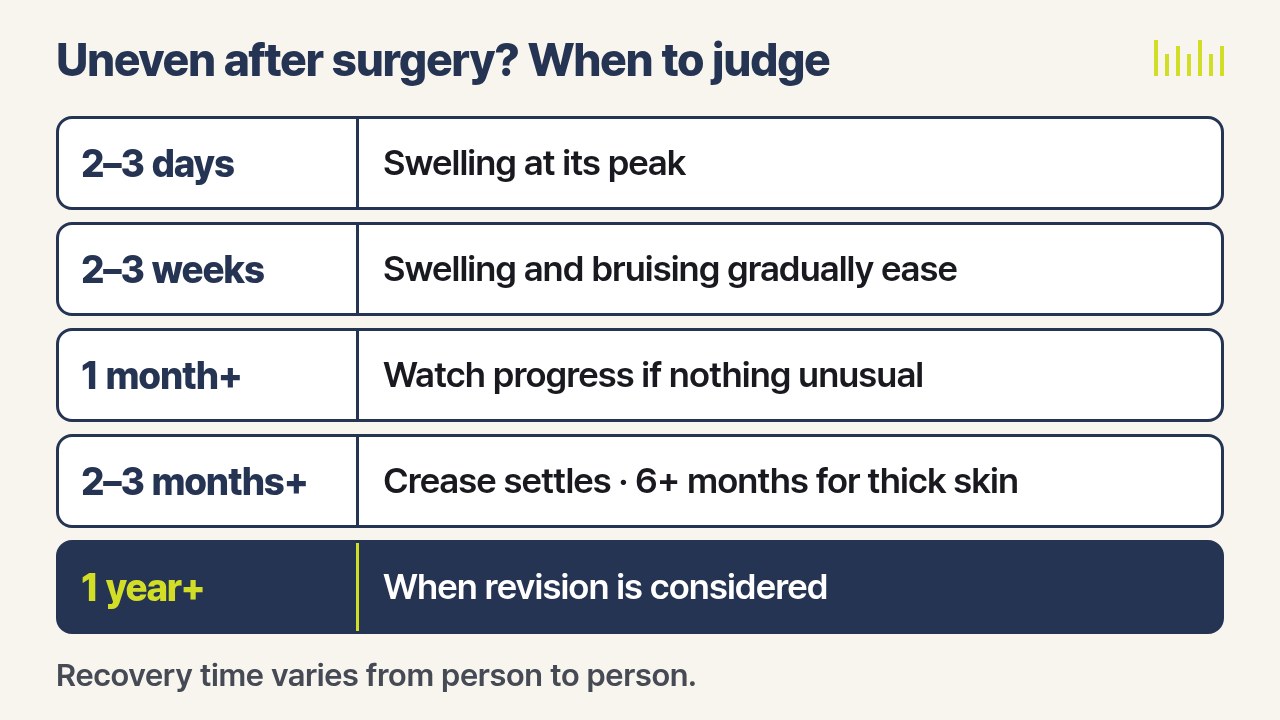
Right after surgery, swelling does not go down at the same pace on both sides, so a temporary difference between the left and right eyes is common. Swelling is usually at its worst 2–3 days after surgery, and swelling and bruising may last for around 2–3 weeks. In most cases, the swelling on both sides becomes similar as recovery progresses, and the creases settle as well.
It generally takes at least 2–3 months for the crease to settle, and it can take 6 months or more if the skin is thick or the incision was wide. That is why it is too early to judge the final result from a difference seen in the early post-operative period. If there is nothing unusual, it is best to watch how things progress for at least about a month.
When to see a doctor without waiting
Not every change is part of normal recovery. If you have severe pain that painkillers do not control or pressure in the eye, vision that becomes blurrier over time, eyes that do not close fully, a feeling that your eye-opening strength has weakened, a scar that turns red and hard, or repeated inflammation or a small lump you can feel, do not wait to see how it goes — see the clinic that performed your surgery.
Where does the difference that makes eyes look uneven come from?
If a difference remains after the recovery period, the first step is to break down what exactly is different. Even when both look ‘uneven’ from the outside, the place where the difference comes from can be divided into three broad groups.
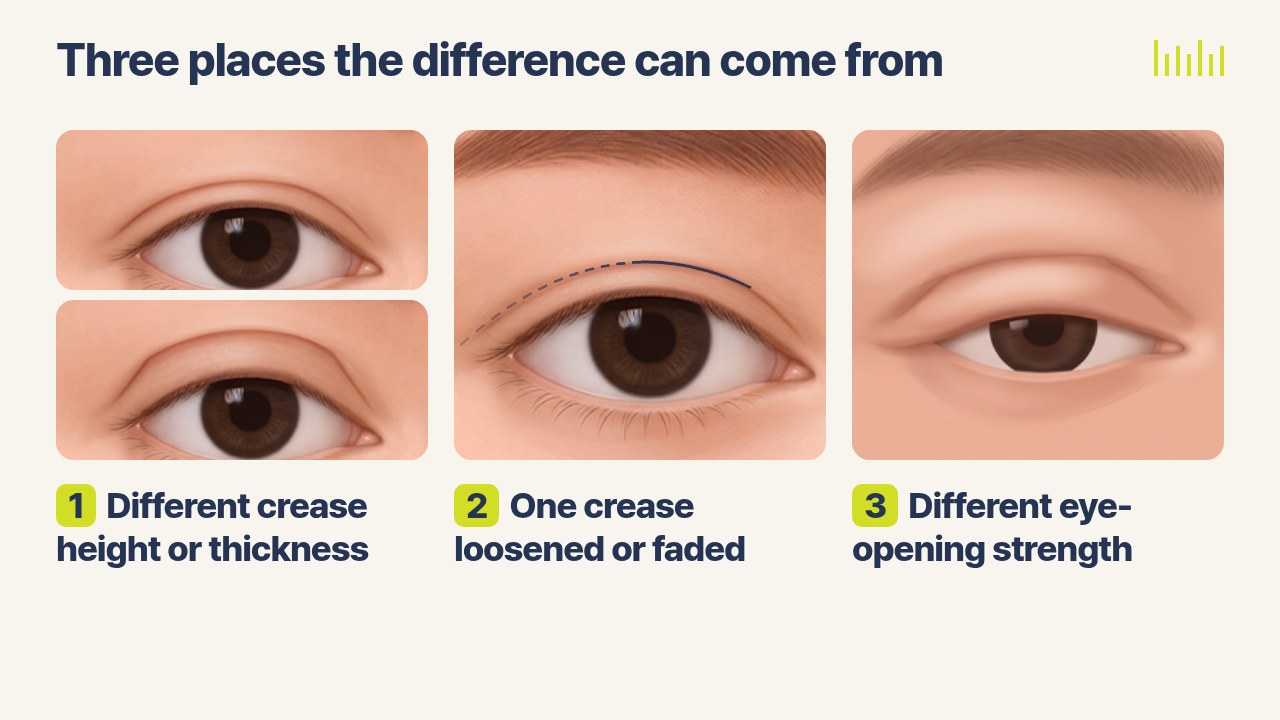
- Different crease height or thickness — Cases where the two creases were designed differently in the first surgery, or where the size or height of the eyeballs was not fully reflected in the plan.
- One crease loosened or faded — If the crease was not secured firmly enough or not enough fat was removed and one double eyelid loosens, the two creases can look different.
- Different eye-opening strength — If the strength of the muscle that opens the eye differs between the left and right, the eyes can look different in size and fold shape even with the same crease. If there is ptosis and only double eyelid surgery is done, the double eyelid may look loosened or the eyes may look sleepy.
There is one more thing to consider. A person’s face is not identical on the left and right to begin with. So how far the surgical plan reflected the difference between the two eyes can also affect the result.
Why uneven eyes are a common reason for revision surgery is covered in an earlier post, ‘Eye Surgery’ Has Become Popular, Leading to Many Reoperations for Uneven Eyes and Sausage Eyes. This post focuses on the next question: which side to correct, and how far.
What do closed eyes and open eyes each show?
When planning a suture-method (natural adhesion) double eyelid, 1mm Plastic Surgery looks at the eyes when open and when closed, as well as the balance of the whole face. Looking at uneven eyes in these two states separately can also help gauge where the difference comes from.
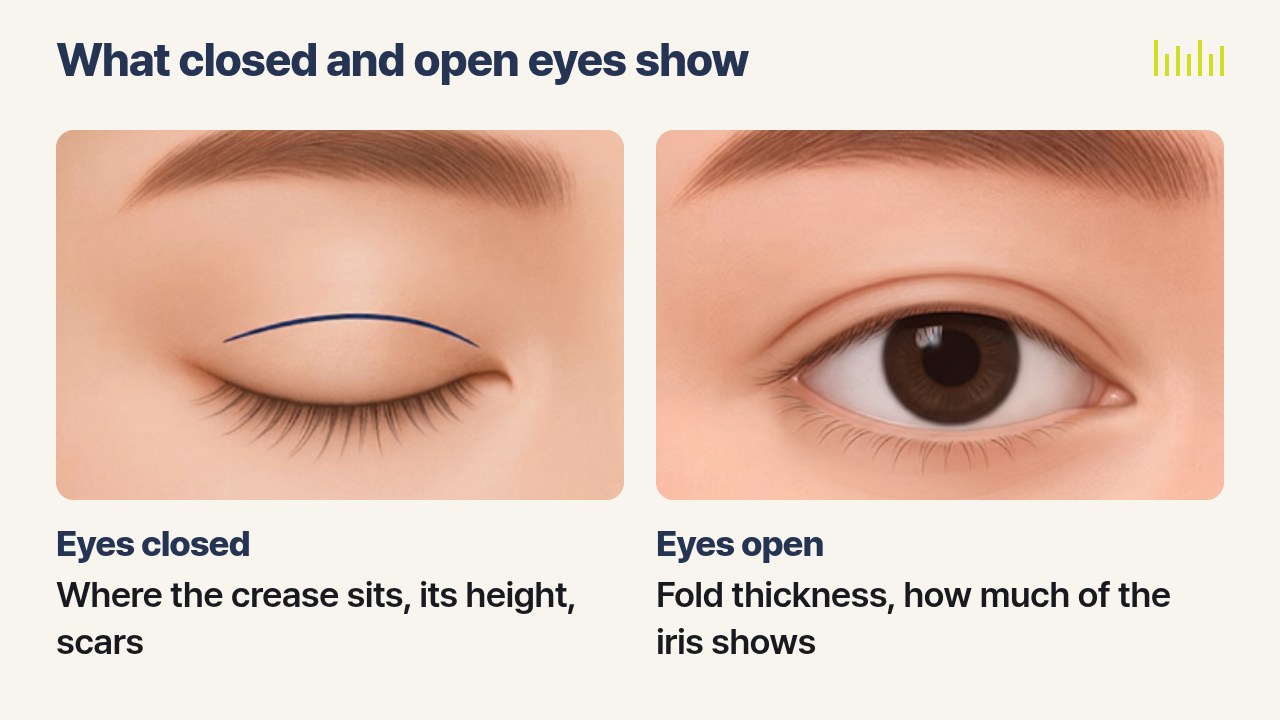
| State | Mainly looked at | Possible related cause |
|---|---|---|
| Eyes closed | Where the crease is drawn and its height, scars | Differences in crease design, scars from the previous surgery |
| Eyes open | Thickness of the double eyelid fold, how much of the iris shows | Loosened crease, different eye-opening strength |
| Whole face | Whether the forehead is used a lot to open the eyes, left–right differences across the face | Weakened eye-opening strength, pre-existing left–right differences |
To aid understanding, the table summarises what can be looked at in each state. The actual cause is confirmed through an examination.
Eye-opening strength is gauged by how much of the iris shows. By 1mm Plastic Surgery’s guide, when about 80% of the whole iris shows, it is considered within the normal range, and less than that can give a sleepy impression. However, this number alone is not used to decide; the details are confirmed through consultation and examination.
Should only one side be corrected, or both?
The scope of correction is what people with uneven eyes think about most. The answer depends on where the cause lies. Even for the same unevenness, the extent of surgery may differ depending on whether the crease is refined again or eye-opening strength is also addressed.
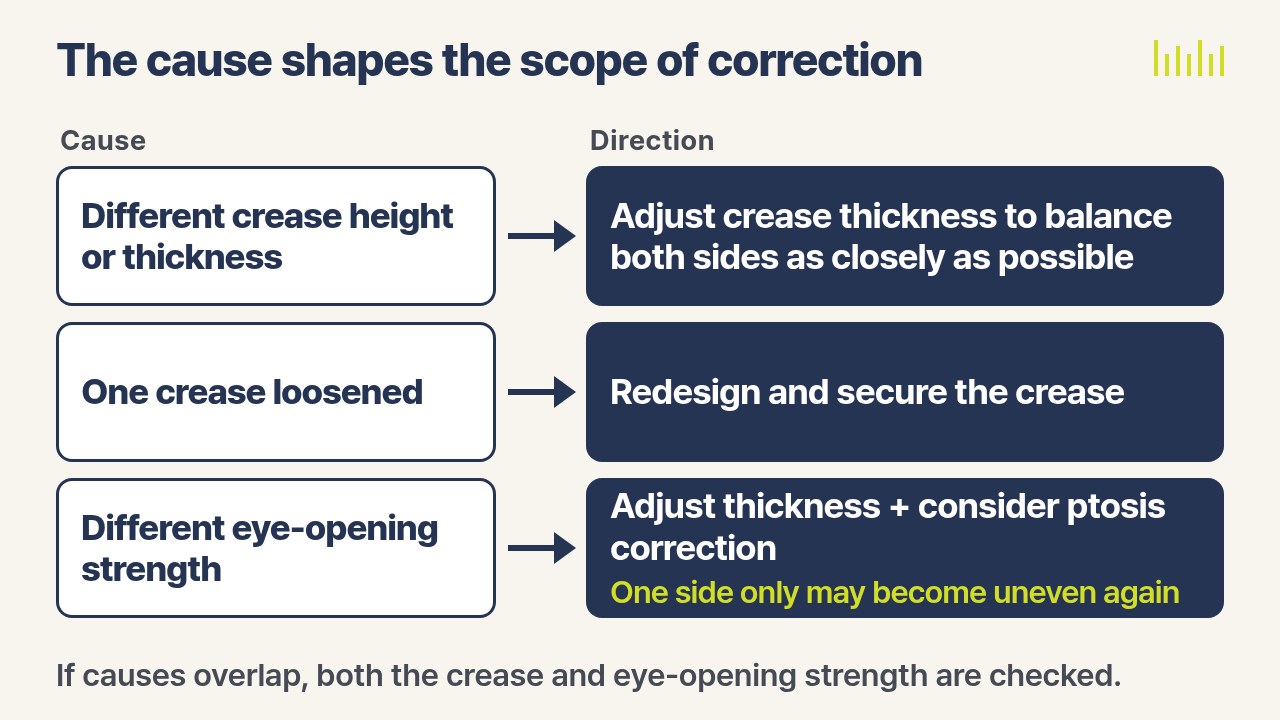
- Different crease height or thickness — The double eyelid thickness is adjusted to balance the asymmetry between the two eyes as closely as possible. The specific scope of correction is decided through an examination after checking the condition of both eyes.
- One crease loosened — The focus is on redesigning the crease on the loosened side and securing it to keep it from loosening again. The difference in height and thickness from the other crease is also considered.
- Different eye-opening strength — Eye-opening strength is checked along with adjusting the double eyelid thickness, and ptosis correction is considered if needed. Ptosis correction on one eye only is possible, but if the other side is left uncorrected, the eyes may become uneven again later, so 1mm Plastic Surgery recommends correcting both sides.
- When causes overlap — Eye-opening strength is checked along with adjusting the double eyelid thickness.
If you have already had double eyelid surgery
If eye-opening strength is still insufficient after double eyelid surgery, there is also the option of ptosis correction without touching the existing double eyelid crease. Whether the crease needs to be made again, or only eye-opening strength needs to be addressed, is determined through an examination.
Will both eyes look identical after correction?
A common thought
This time both sides will be exactly the same, right?
A person’s face cannot be identical on the left and right. The size and height of the eyeballs, eye-opening strength, skin thickness and the amount of fat in the eyelids all differ slightly between the two sides. So the goal of correction is not to make both eyes identical, but to reduce noticeable differences as much as possible.
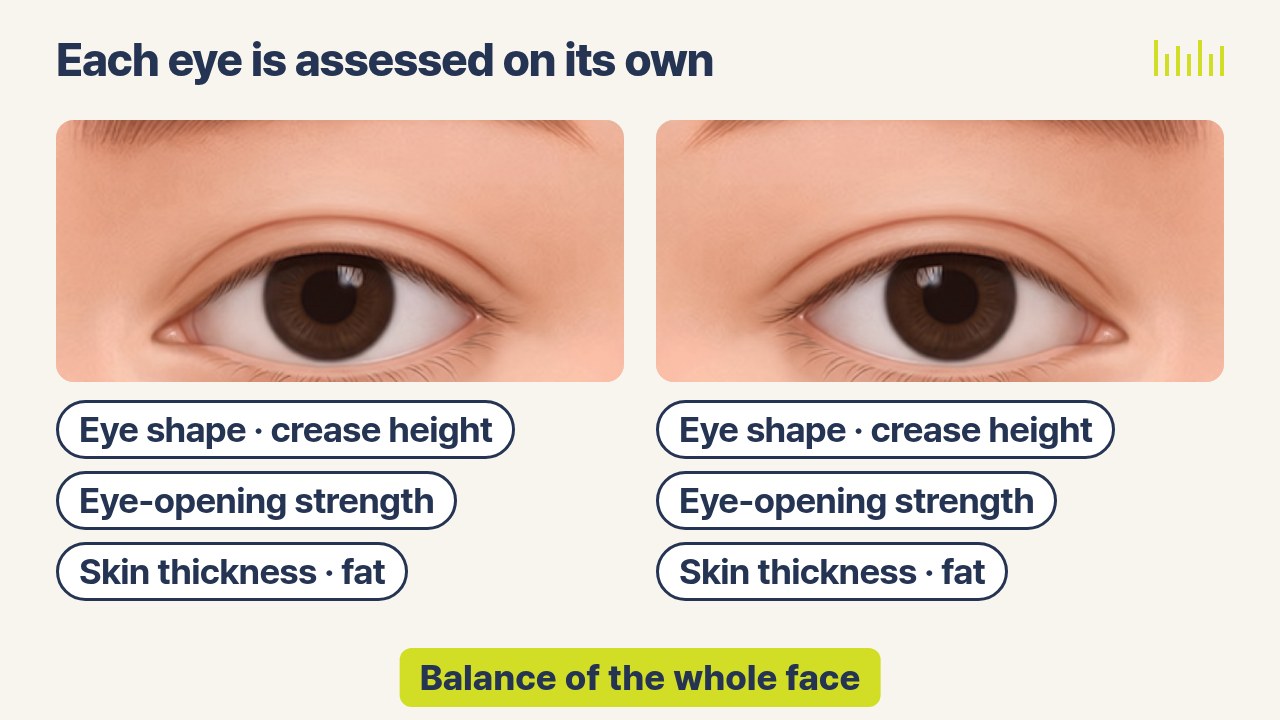
When planning a suture-method (natural adhesion) double eyelid, 1mm Plastic Surgery analyses the shape of the eyes, eye-opening strength, muscles, skin thickness and left–right differences in the face, and draws up separate surgical plans for the right eye and the left eye. In revision surgery, the problems from the previous surgery and each condition that calls for revision are identified first.
How much difference remains after correction may vary from person to person, depending on the current condition of the eyelids and on adhesions and scars from the previous surgery. Talking in advance during the consultation about what can be balanced and what may remain can help you understand the result.
When is revision surgery for uneven eyes done, and what is checked?
According to 1mm Plastic Surgery’s double eyelid revision guide, revision surgery is best done at least one year after the first surgery. This is because the eyelid tissue needs to be stable for an accurate diagnosis. However, depending on the surgeon’s judgement, there are cases where it is done in the early post-operative period, before the scar hardens.
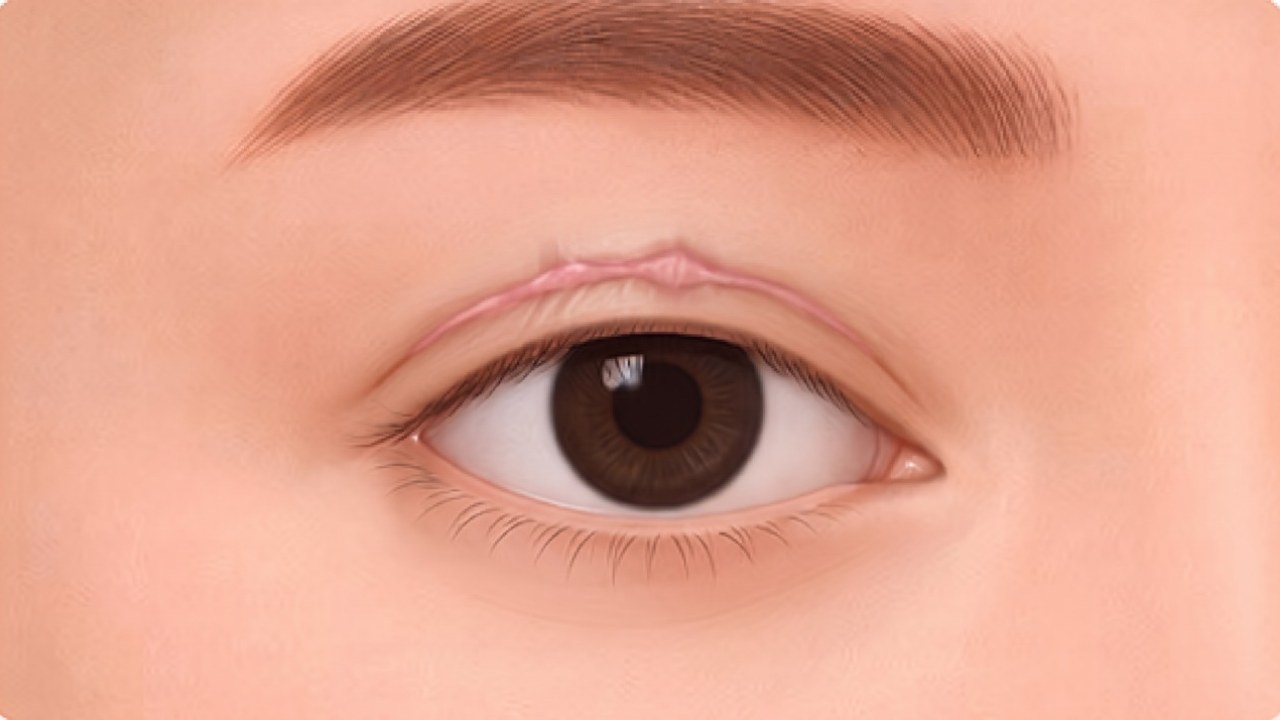
Revision surgery works on an eyelid that has already been operated on. That is why it is important to remove the scar tissue formed during the previous surgery and to minimise tissue damage during the procedure. An existing scar cannot be removed entirely, but the surgery is planned with the size and position of the scar in mind, to keep further scarring to a minimum.
- What you are currently unhappy with — which bothers you most: the height, thickness or shape of the crease, or the size of the eyes
- The problem as the specialist sees it — adhesions, scars, amount of fat, eye-opening strength on each side
- The improvement you want — what kind of crease and eye shape you would like
- Information on the previous surgery — if you know when it was done and which method was used (incisional method · suture method), please share it at the consultation
The six cases in which revision may be needed are covered in an earlier post, ‘Double Eyelid Revision: What to Know Before Going Back’.
Revision is still surgery
After revision surgery, too, swelling and bruising occur, and inflammation or infection may develop. Scarring may remain, or some left–right difference may remain or appear again. Results and recovery differ from person to person depending on the eye condition and previous surgical history. If you notice any unusual symptoms, tell the clinic that performed your surgery straight away.
Asymmetrical eyes: frequently asked questions
It has been a month since my double eyelid surgery and my eyes look uneven. Do I need revision surgery?
It is still too early to judge. It generally takes at least 2–3 months for the crease to settle, and it can take 6 months or more if the skin is thick or the incision was wide. Revision is considered once the tissue has stabilised, usually at least one year later. However, if you have unusual symptoms such as severe pain or inflammation, see a doctor straight away.
Can revision surgery be done on just one eye?
It depends on the cause. If a crease has loosened, the focus is on redesigning the crease and securing it to keep it from loosening again, and the difference in height and thickness from the other side is also considered. If the cause is a difference in eye-opening strength, ptosis correction on one eye only is possible, but if the other side is not corrected, the eyes may become uneven again later, so correcting both sides is recommended.
Can I have ptosis correction after double eyelid surgery?
If eye-opening strength is still insufficient after surgery, there is the option of ptosis correction without touching the existing double eyelid crease. Whether the crease needs to be made again is confirmed through an examination.
Won’t revision surgery leave more scarring?
An existing scar cannot be removed entirely. However, revision is planned with the size and position of the scar in mind, to keep further scarring to a minimum, and whether scar tissue needs to be removed is decided depending on the condition. How much scarring remains varies from person to person.
What happens at the consultation
Which side differs, and why —
we start by checking the cause together
- Checking the left–right difference that bothers you now
- Checking left–right differences in the crease and eye-opening strength
- Checking adhesions and scars from the previous surgery
- Explaining the scope and direction of correction
We check what you are currently unhappy with and the improvement you want, then discuss the surgical plan. Results and recovery may differ from person to person.
Consultation and booking
| Enquiries |
[email protected]
Getting in touch in advance can help reduce your waiting time. |
|---|---|
| Telephone | +82-2-552-1171 |
| +82 10-9451-1171 | |
| Opening hours |
Weekdays 10:00 – 19:00 Saturday 10:00 – 16:00 Closed Sundays and public holidays — for holiday opening, please check the monthly schedule notice. |
| Address | 7th, 8th, 9th and 10th floors, Youngshin Building, 449 Gangnam-daero, Seocho-gu, Seoul
In front of Exit 7, Sinnonhyeon Station — a 2-minute walk |
| Website | 1mmpsglobal.com |
#AsymmetricalEyes #AsymmetricalDoubleEyelids #UnevenDoubleEyelids #DoubleEyelidRevision #RevisionDoubleEyelidSurgery #PtosisCorrection #EyeSurgery #GangnamPlasticSurgery #1mmPlasticSurgery #1mmps #EpicanthoplastySurgery
This post was written by the founder of a medical institution to provide medical information. The eye images in this post are concept illustrations and diagrams made to aid understanding; they are not real people or before-and-after comparisons. For any surgery, its suitability for you, the result and the course of recovery may differ depending on your eye condition and surgical history, and side effects may occur. Please confirm the details through a consultation.
Clinic Info
Details
- 서울특별시 서초구 강남대로 449 영신빌딩 7, 8, 9, 10층
- 02-552-1171
- Mon-Fri 10:00-19:00Sat 10:00-16:00
- Director 도언록
- 1mmps.com