2026-11-12
Bulbous Tip Rhinoplasty: Causes, Correction Methods and Recovery
A bulbous nasal tip can have different causes — cartilage or thick tissue, among others — and tip height is checked as well, so the correction method differs. Here are the methods and the recovery flow after surgery.
A nasal tip can look bulbous for more than one reason. It may be due to spread-apart cartilage or to thick skin and fat. In some cases the tip also sits low or droops. Because different causes call for different correction methods, the starting point is to find out through an examination why your nasal tip looks bulbous. This article goes through the correction methods by cause and the recovery process after surgery, in that order.
Why does my nasal tip look bulbous?
A bulbous nose (called 복코 in Korean) is a nasal tip that looks round and spread out. Even when the nasal bridge is fairly high, the tip alone can look low or bulbous.
A common thought
Can’t I just slim down the flesh on the tip?
According to the 1mm Plastic Surgery website, the cause of a bulbous tip is identified by looking at the shape of the cartilage, how far it is spread apart, and the thickness of the fat and muscle under the skin, among other factors. Even when noses look similar, the cause can differ from person to person.
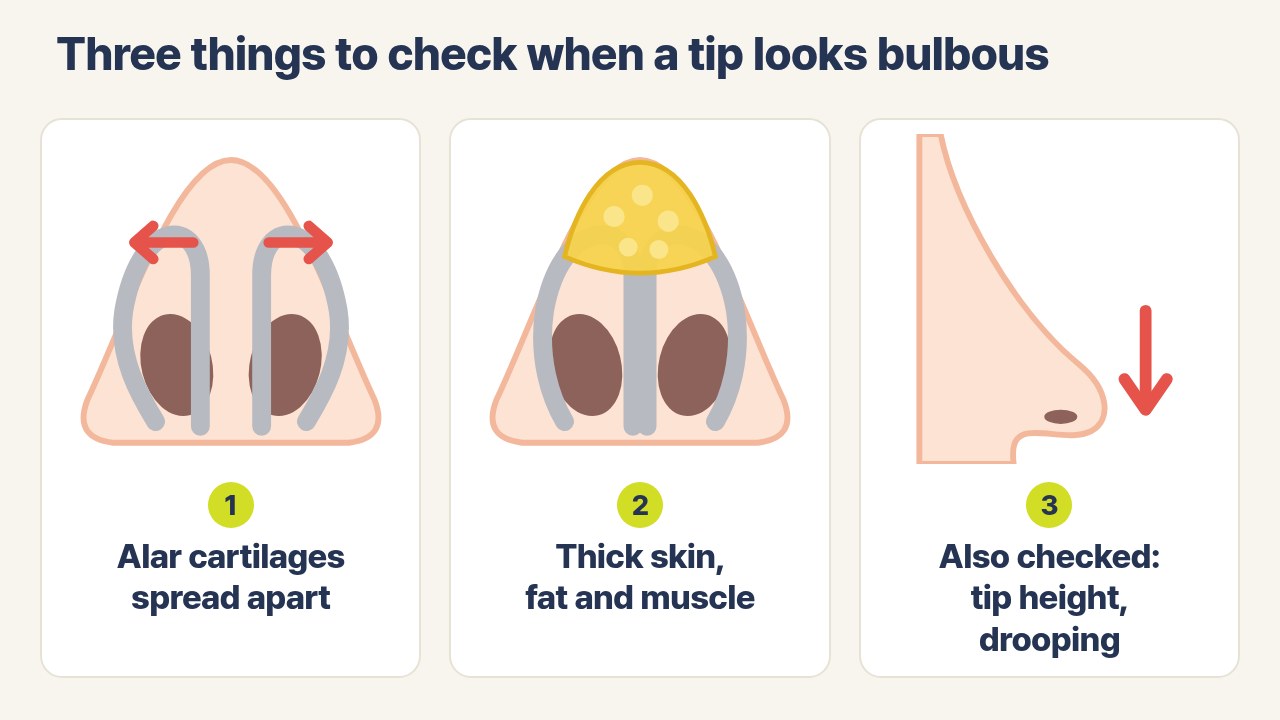
- Spread-apart alar cartilages — If the gap between the left and right alar cartilages that shape the tip is wide, or the cartilage is rounded and spread out, the tip can look wide.
- Thick skin, fat and muscle — If there is a lot of fat or muscle tissue under the skin of the tip, the tip can look thick and round.
- When the tip is also low or drooping — In some cases the tip is low or pressed downward as well as bulbous. In that case the height and angle of the tip are assessed too.
These causes can also overlap in one person. The surgical plan changes depending on which cause is greater.
Is it a bulbous tip, or are the nostrils wide?
The concern that ‘my nose looks spread out’ can come from the tip or from the alae (the sides of the nostrils). The 1mm Plastic Surgery website also presents nose tip surgery, which works on the tip, and alar reduction, which reduces the width of the alae, as separate procedures.
| Item | Tip correction (nose tip surgery) | Alar reduction |
|---|---|---|
| Area treated | The nasal tip (alar cartilages, tissue under the skin of the tip) | The alae and the area around the nostrils |
| Considered when | The tip looks round and spread out, or low | The alae are wide or thick, or the nostrils are large or differ in shape between left and right |
| Main steps | Bringing the cartilages together and suturing them, supporting or grafting with autologous cartilage, reducing thick tissue | Making an incision, for example inside the nostril, removing part of the skin and tissue, and closing it with sutures |
| Points to consider | The height and angle of the tip need to be assessed together with the nasal bridge and the angle to the lip | Removed skin does not regenerate, so it is difficult to return to the pre-surgery state; judging symmetry and how much to remove is important |
The two procedures are sometimes planned together, and which one is needed is decided through an examination. The table summarises information from our website and articles posted by the clinic; actual surgical methods may differ depending on individual condition.
If you would like to see various nose types at a glance, you may also find our earlier article ‘Alar Reduction? Nose Surgery by Type, Including Wide Nostril Correction’ helpful.
How do correction methods differ by cause?
According to the 1mm Plastic Surgery website, bulbous tip correction is planned to reduce thick tissue and to refine and bring together spread cartilage to shape the tip. Which method is actually used depends on the cause and its degree.
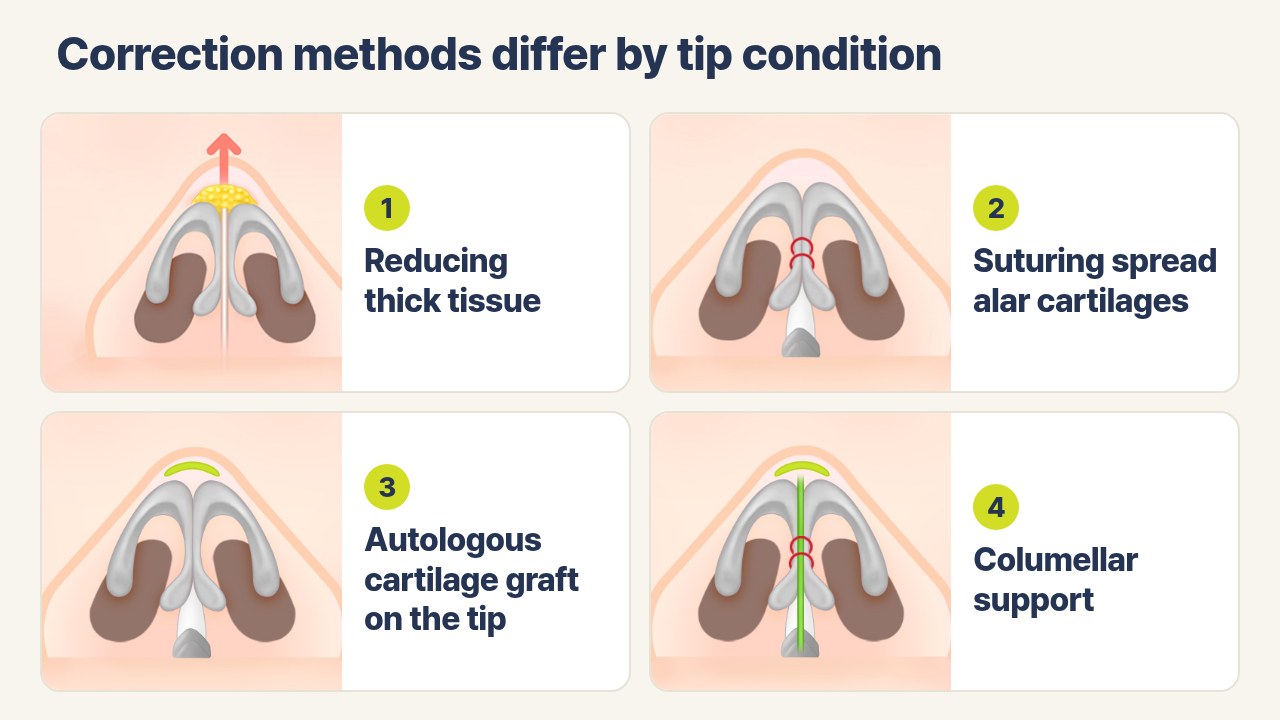
- Reducing thick tissue — When there is a lot of fat and the skin tissue is thick, an appropriate amount of the fat and muscle tissue under the skin is removed to reduce the volume of the tip.
- Suturing spread alar cartilages — If the tip already has a defined shape and is not very bulbous, a method that brings the spread alar cartilages together with sutures to fix the tip may be used.
- Bringing cartilage together and adding autologous cartilage — For a tip that is bulbous and low, the alar cartilages are brought together and then autologous cartilage such as ear cartilage is grafted onto the tip to complement its shape and height.
- Columellar support — If the tip droops and is pressed down severely, the columella (the column between the nostrils) is supported upright with autologous cartilage to raise the tip and refine its shape.
According to the website, 1mm Plastic Surgery uses autologous tissue such as dermis and ear cartilage for the nasal tip. You can find more details on each method on the 1mm Plastic Surgery nose tip surgery page.
In short
Even for the same ‘bulbous tip’, the method differs depending on whether the cartilage or the tissue under the skin is the bigger issue. No single method suits every bulbous nose.
Should only the tip be corrected, or the nasal bridge as well?
The tip sits on the line that runs from the nasal bridge to the lip, so it is difficult to look at it in isolation. The criteria below are summarised from our website and articles posted by the clinic.
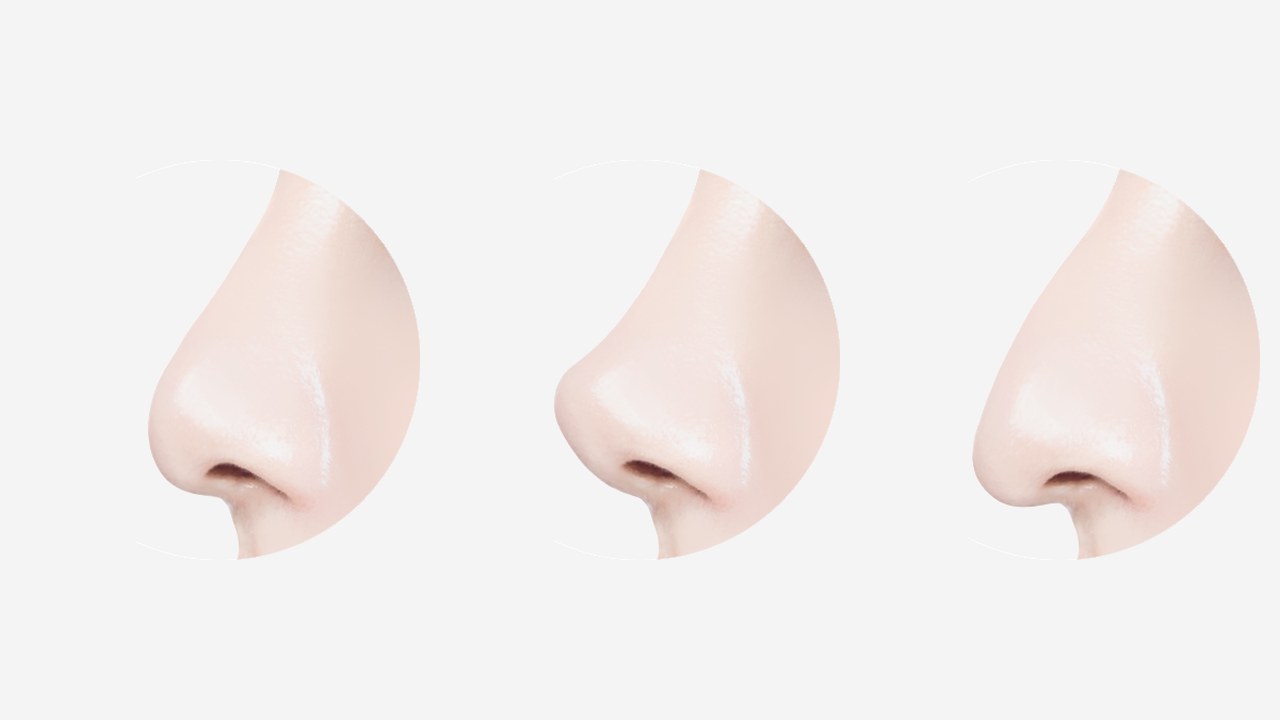
- When only the tip is low or bulbous compared with the bridge — Changing the shape of the tip alone can change the nose line, so tip correction is considered first.
- When both the bridge and the tip are low — It is sometimes planned together with nasal bridge surgery to raise the bridge.
- The angle of the side profile — The angle between the tip and the upper lip (nasolabial angle), the shape of the columella and the height of the bridge are analysed together to decide the angle of the tip.
- Breathing function — The nose is the organ you breathe through, so its function needs to be considered along with its shape. If you often have a blocked nose or your nose is crooked, please mention it during your consultation.
The goal is not simply to make the tip high and pointed. The degree of change is decided by looking at the line from the bridge to the tip and the harmony of the face as a whole.
In what order does recovery after surgery progress?
The speed of recovery differs by person and by the extent of surgery. Below, the rhinoplasty information on the 1mm Plastic Surgery website is grouped in time order. The timing is an approximate flow, and the instructions of the clinic that performed your surgery come first for your own recovery schedule.
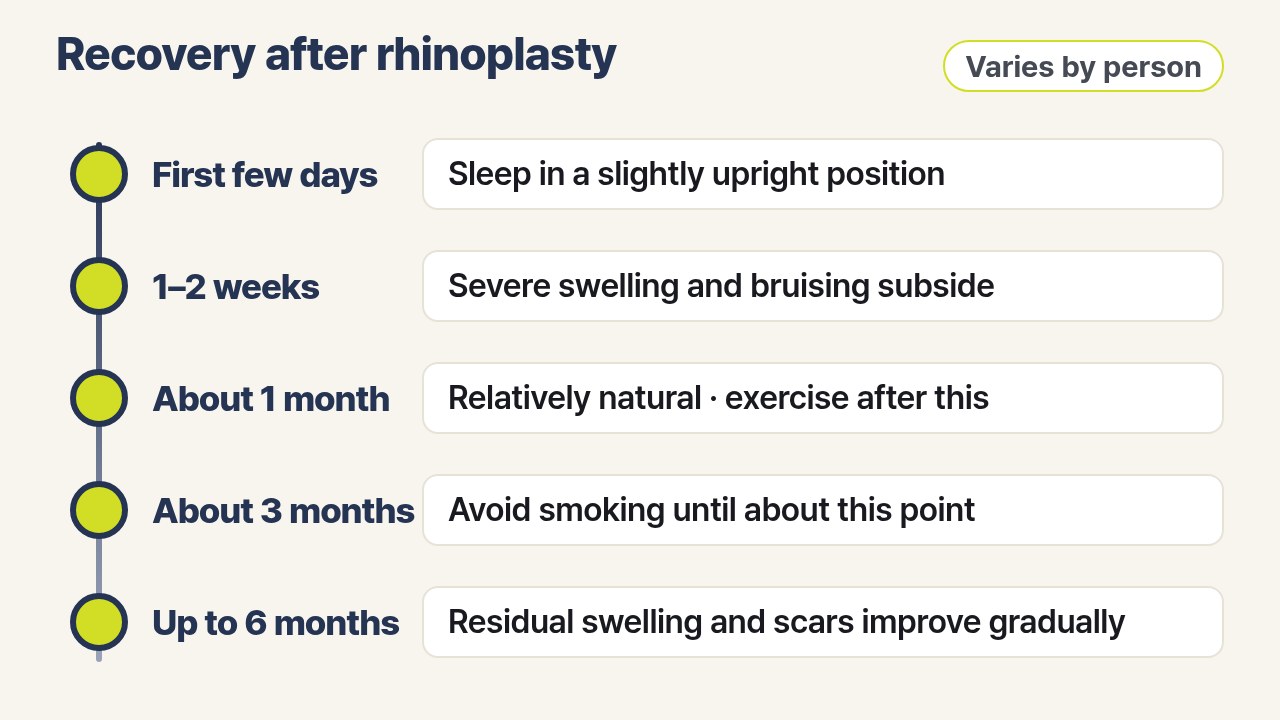
- The first few days after surgery — It is recommended to sleep in a slightly upright position. Take care not to touch your nose or bump it while tossing and turning in your sleep.
- Around 1–2 weeks — This varies from person to person, but severe swelling and bruising usually subside within this period.
- Around 1 month — The nose usually looks relatively natural. It is recommended to avoid alcohol until at least around this time, and exercise is possible from 1 month onward.
- Around 3 months — It is recommended to avoid smoking as much as possible for about 3 months.
- Up to 6 months — Residual swelling, scars and the like improve gradually.
Scabs inside the nose may come off and cause bleeding if you strain too hard. Until the mucous membrane has healed cleanly, avoid strenuous exercise and straining.
Check with the clinic in advance
How long a splint is worn, when stitches are removed and follow-up visits are scheduled, and when you can start washing your face, wearing makeup and wearing glasses may differ depending on the surgical method. Please check these with your clinic before surgery.
What side effects can occur, and when should I contact the clinic straight away?
Tip correction is also surgery, so side effects can occur. Most improve during recovery, but knowing about them in advance helps you notice warning signs early.
Side effects and precautions
- Swelling and bruising — Most subside over time, but residual swelling can last for several months.
- Bleeding — Bleeding can occur when scabs inside the nose come off.
- Scarring — A scar forms where the incision was made and improves gradually over several months. The degree varies from person to person.
- Inflammation — Inflammation can occur after rhinoplasty.
- Asymmetry or a different shape — The left and right sides may differ, or the shape may differ from what you expected. If the alae were also reduced, removed skin does not regenerate, so it is difficult to restore the original state.
- Functional problems such as a blocked nose — If surgery is performed without considering the function of the nose, problems such as a blocked nose can occur.
- Previous filler — Filler remaining in the nose can cause deformation or complications after surgery. Please tell us about any filler treatments in advance.
If your nose looks different after surgery or you feel something moving, it is best to visit the clinic promptly to have it checked. If you notice any other change that worries you, contact the clinic that performed your surgery.
Bulbous tip correction: frequently asked questions
Will my nasal tip feel hard after bulbous tip correction?
When autologous cartilage is used, according to the website, 1mm Plastic Surgery corrects the tip with resilient autologous cartilage and plans for the tip to move softly and naturally after surgery. The recovery process and how it feels vary from person to person.
I had nose filler before. Can I still have surgery?
Even filler injected a long time ago may leave residue if a large amount was injected or it was injected several times. Because it can cause deformation or complications after surgery, our website recommends dissolving it. Please tell us about your treatment history during the consultation.
Can I sleep on my side after nose surgery?
For the first few days after surgery, it is recommended to sleep in a slightly upright position. Take care not to touch your nose or apply impact by tossing and turning in your sleep, and if your nose looks different or you feel something moving, visit the clinic promptly to have it checked.
When can I drink, smoke and exercise again?
According to the website, it is recommended to avoid alcohol for at least 1 month and smoking for about 3 months as much as possible, and exercise is possible from 1 month onward. This may differ depending on the extent of surgery, so please follow your clinic’s instructions.
What we do in a consultation
Before choosing a method,
we check why the tip looks bulbous
- Checking the tip cartilage and skin thickness
- Telling apart tip and alar causes
- Analysing harmony with the bridge and nasolabial angle
- Explaining the recovery schedule and precautions
We check your nasal structure and skin condition and discuss a suitable surgical approach. Results and the course of recovery may differ from person to person.
Consultation and booking
| Enquiries |
[email protected]
Getting in touch in advance can help reduce your waiting time. |
|---|---|
| Telephone | +82-2-552-1171 |
| +82 10-9451-1171 | |
| Opening hours |
Weekdays 10:00 – 19:00 Saturday 10:00 – 16:00 Closed Sundays and public holidays — for holiday opening, please check the monthly schedule notice. |
| Address | 7th, 8th, 9th and 10th floors, Youngshin Building, 449 Gangnam-daero, Seocho-gu, Seoul
In front of Exit 7, Sinnonhyeon Station — a 2-minute walk |
| Website | 1mmpsglobal.com |
#BulbousTipRhinoplasty #BulbousNose #NoseTipSurgery #AlarCartilage #AlarReduction #RhinoplastyRecovery #RhinoplastyKorea #1mmPlasticSurgery #KoreanUnderEyeFatSurgery #KoreanEyelidSurgerySpecialist
This post was written by the founder of a medical institution to provide medical information. The images in this post are explanatory diagrams we drew ourselves and rhinoplasty illustrations from the 1mm Plastic Surgery website (with labels added); they do not show real people or before-and-after comparisons. The interior image is from the ‘Clinic tour’ on the website and may differ from the actual premises. For any surgery, its suitability for you, the result and the course of recovery may differ depending on your nasal condition, and side effects may occur. Please confirm the details through a consultation.
Clinic Info
Details
- 서울특별시 서초구 강남대로 449 영신빌딩 7, 8, 9, 10층
- 02-552-1171
- Mon-Fri 10:00-19:00Sat 10:00-16:00
- Director 도언록
- 1mmps.com